
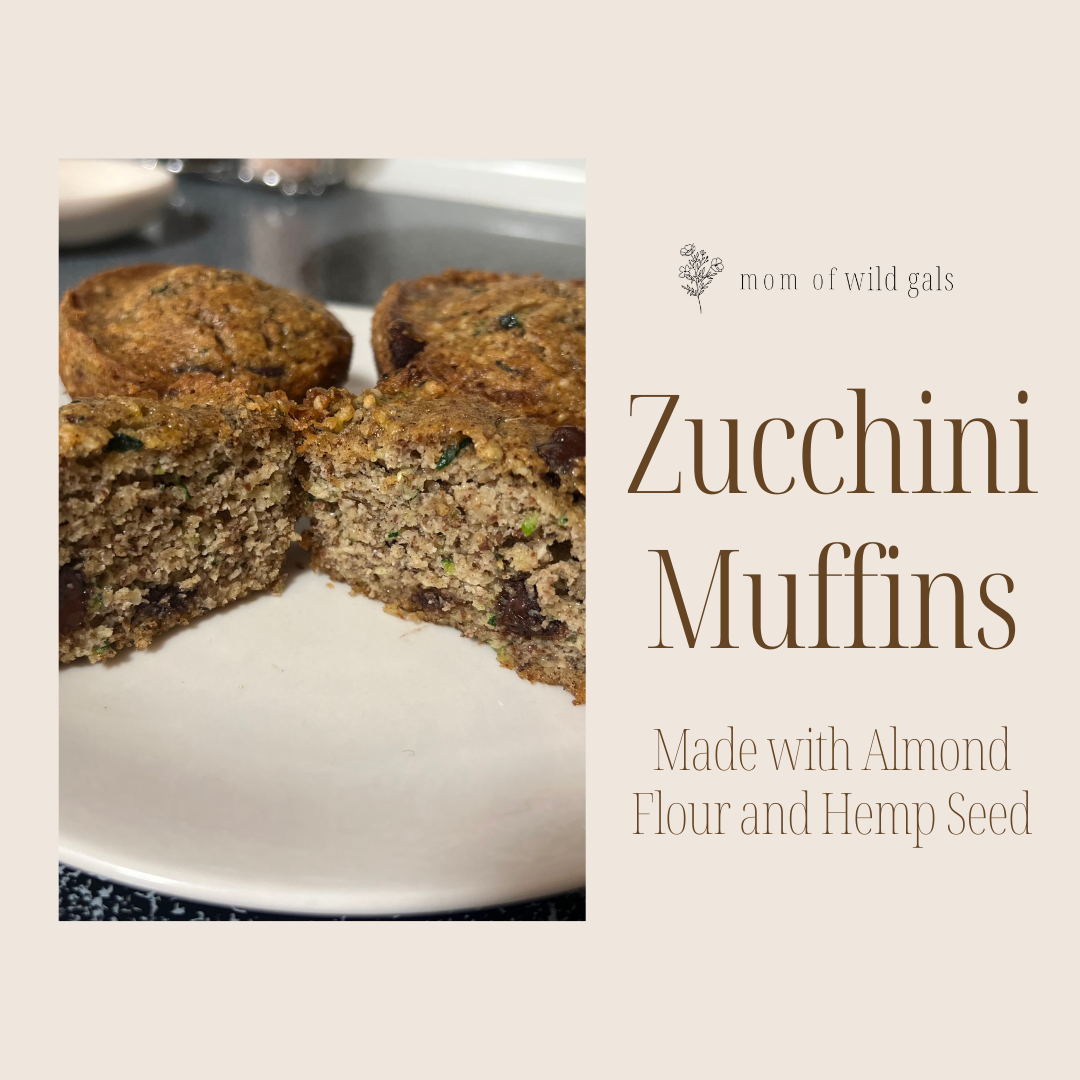
Homemade Almond Flour Zucchini Muffins: A Sweet Little Homeschool Kitchen Lesson
Because some of the sweetest homeschool memories are made around the kitchen table.
There’s something special about a homemade muffin fresh from the oven, especially when little hands help make it!
These almond flour zucchini muffins are soft, perfectly spiced, and filled with little bites of chocolate. They're a delicious way to sneak some veggies into a sweet treat, and they're surprisingly simple to make.
As a homeschooling mom of three girls, I love finding ways to turn everyday moments into learning opportunities. And honestly, some of our best lessons happen outside of our workbooks, especially in the kitchen!
Whether you're looking for a yummy breakfast, an afternoon snack, or a fun hands-on homeschool activity, these muffins check all the boxes.
Almond Flour Zucchini Muffins
Prep Time: Approximately 15 minutes
Bake Time: 22–27 minutes
Oven Temperature: 350°F
Yield: 12 muffins
Ingredients
1 cup grated zucchini (about 1 medium zucchini)
2 cups almond flour
⅓ cup ground flaxseed or hemp hearts
½ teaspoon baking soda
1 teaspoon baking powder
1 pinch sea salt
1 tablespoon ground cinnamon
½ teaspoon ground nutmeg
½ cup sugar (I used turbinado sugar, but you can substitute your preferred sweetener)
5 large eggs
⅓ cup avocado oil or olive oil
1 teaspoon pure vanilla extract
½ cup chocolate chips (I used dark chocolate, but any kind will work!)
Directions
Preheat your oven to 350°F.
Lightly grease a 12-cup muffin pan or line it with muffin liners.
Wash your zucchini, trim off the ends, and finely grate it. You can use a cheese grater or a food processor.
In a large mixing bowl, whisk together the almond flour, ground flaxseed or hemp hearts, baking soda, baking powder, sea salt, cinnamon, nutmeg, and sugar.
In a separate bowl, whisk together the eggs, oil, and vanilla extract.
Pour the wet ingredients into the dry ingredients and mix until combined.
Gently fold in the grated zucchini and chocolate chips using a spatula.
Divide the batter evenly among the 12 muffin cups.
Bake for 22–27 minutes, or until the centers are set and no longer look doughy. A toothpick inserted into the center should come out without wet batter.
Allow the muffins to cool in the pan for 5–10 minutes before transferring them to a cooling rack.
Enjoy!
Turning Muffin Making Into a Homeschool Lesson
One of my favorite things about homeschooling is that learning doesn't have to happen at a desk. Sometimes it happens with flour on the counter, chocolate chips mysteriously disappearing, and three girls eagerly waiting for the timer to go off.
Baking is a wonderful way to practice real-life skills while making something delicious together.
Here are a few simple ways to turn this recipe into a hands-on homeschool lesson.
1. Kitchen Math: Measuring & Fractions
Baking gives children the opportunity to see math in action!
Have your kids help measure ingredients while introducing fractions like ½, ⅓, and ¼.
Try these activities:
Count the muffin cups together.
Compare different measuring cup sizes.
Ask how many ½ cups make 1 whole cup.
Practice simple addition while counting the eggs.
Divide 12 muffins equally among family members.
For younger learners, simply scooping, pouring, and counting are wonderful early math activities.
2. Kitchen Science: What Makes Muffins Rise?
Did you know baking is basically one big science experiment?
While mixing the ingredients, talk about how baking soda and baking powder help muffins rise.
You can also explore how ingredients change when heated.
Ask your little learners:
What happens when we mix wet and dry ingredients?
Why does the batter change in the oven?
What do you think would happen if we forgot the baking powder?
Why do the chocolate chips get soft when heated?
Encourage your children to make predictions before baking and compare them to what actually happens.
3. Life Skills: Following Directions
Cooking teaches so many important skills beyond math and science.
Children practice following instructions, taking turns, patience, and cleaning up after themselves.
Have younger children pour premeasured ingredients into the bowl, while older children can read the recipe aloud or measure ingredients independently.
And yes, cleaning up afterward counts as part of the lesson!
4. Language Arts: Reading & Sequencing
Recipes are a fantastic way to practice reading comprehension and sequencing.
Before baking, read through the directions together. Talk about what needs to happen first, next, and last.
After your muffins are finished, have your child retell the steps in order.
For a fun extension, ask them to write or draw their very own recipe card!
5. Nature Study: Getting to Know Zucchini
Before grating the zucchini, take a few minutes to explore it.
Talk about how zucchini grows, what the inside looks like, and why it's considered a fruit botanically, even though we usually prepare it like a vegetable.
You can even save a few seeds from a mature zucchini to examine or plant in your garden.
It's a simple way to bring a little nature study into your kitchen!
Making Memories Around the Table
Not every homeschool lesson needs a worksheet, a textbook, or a perfectly planned activity.
Sometimes learning looks like counting chocolate chips, measuring flour, asking questions, and sneaking a taste of muffin batter (although raw batter with eggs should wait until baked!).
These are the moments I want my girls to remember: the laughter, the messes, the sweet smells coming from the oven, and the time we spent learning together.
And the best part? At the end of the lesson, everyone gets a muffin!
So grab your mixing bowls, gather your little helpers, and enjoy a little kitchen magic.
From our wild kitchen to yours, happy baking!
Mom of Wild Gals
Homeschool Subjects Covered: Math, Science, Language Arts, Practical Life Skills, and Nature Study
Perfect For: Preschool, Kindergarten, and Elementary-Age Learners