
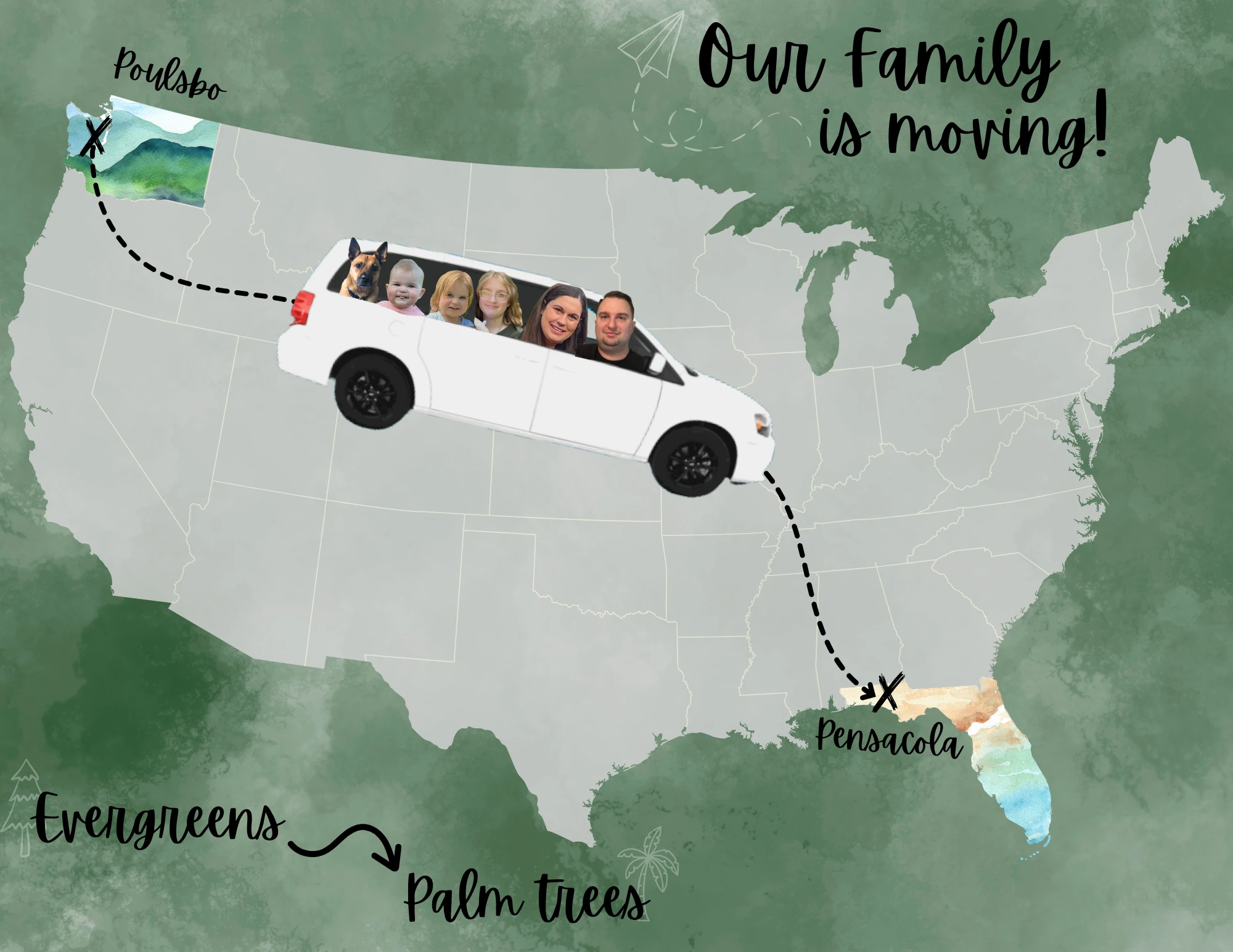
From evergreens to palm trees: how we’re keeping our cross-country military move organized, one binder at a time.
Our family is moving! We’re trading the misty evergreens of Poulsbo, Washington for the sunshine and palm trees of Pensacola, Florida. If you’re a military family, you already know what that means: orders, paperwork, movers, house hunting, school records, pet records… and a whole lot of lists.
A PCS (Permanent Change of Station) is one of the biggest parts of military life. With three girls, a dog, and a homeschool to pack up, I’ve learned that the one thing that keeps me sane during a move is a good PCS binder.
Here’s exactly how I put ours together, plus the websites and resources I lean on every time we move.
What Is a PCS Binder?
A PCS binder is one place for every important document, phone number, receipt, and checklist you’ll need before, during, and after your move. Instead of digging through boxes (or your email) at the worst possible moment, everything is right at your fingertips: at the transportation office, at check-in, at the new school, or at the vet.
The golden rule: your PCS binder travels with you. Never let it get packed by the movers! Label it clearly with “DO NOT PACK” and keep it in your car or carry-on.
What You’ll Need
- A sturdy 2–3 inch binder with a zipper or snap closure
- Tabbed dividers
- Clear sheet protectors (for documents you don’t want to hole-punch)
- A zipper pouch for receipts
- Sticky notes and a pen that lives in the binder
What to Put in Your PCS Binder
1. Orders & Key Documents
- Several printed copies of your PCS orders and any amendments (you’ll be asked for them more often than you’d think!)
- Military ID information and a copy of your power of attorney, if you have one
- Birth certificates, marriage certificate, Social Security cards, and passports
- Vehicle titles, registrations, and insurance information
Tip: Keep originals of very sensitive documents in a separate locked pouch or fire-safe document bag, and never leave the binder in a hot or unlocked car.
2. Moving Company & Household Goods
- Your move confirmation and moving company contact information
- Pack-out and delivery dates
- Inventory sheets from the movers
- A list of high-value items, with photos
- Photos or video of each room and your belongings before pack-out (helpful if you need to file a claim)
3. Housing
- Your current lease or housing paperwork and move-out inspection details
- Contact information for the housing office at your new installation
- New lease, rental listings, or home-buying documents
- Utility companies to cancel and set up (power, water, internet, trash)
4. Medical & Dental
- Copies of medical and dental records for every family member
- Immunization records (schools, camps, and sports will ask for these)
- A list of current prescriptions, plus any referrals
- TRICARE information and notes on transferring care to your new location
5. School & Homeschool Records
This section is a big one for us! Whether your children attend school or learn at home, gather:
- Report cards, transcripts, and standardized test scores
- Withdrawal paperwork from the current school
- IEPs, 504 plans, or therapy records, if applicable
- For homeschoolers: your current portfolio, attendance or activity logs, reading lists, and work samples
Homeschool laws are different in every state. Before you move, look up the requirements for your new state. We’re moving to Florida, so I put together a guide to homeschooling in Florida. (One Florida tip: you’ll file a notice of intent with your new county within 30 days of starting your home education program.)
6. Pets
- Vaccination and vet records, including rabies certificates
- Microchip information
- A health certificate, if you’re flying or moving overseas
- A list of pet-friendly hotels along your route
7. Travel Plans
- Your route and a rough day-by-day plan
- Hotel confirmations
- Emergency roadside information
- Activity ideas and road-trip games for the kids (trust me!)
8. Finances & Receipts
- A pouch for every move-related receipt: hotels, gas, meals, tolls, weigh tickets, and lodging
- Copies of your travel voucher or claim paperwork
- Your moving budget
Tip: Ask your finance or transportation office exactly which receipts you’ll need to be reimbursed before you leave. It’s much easier than trying to track them down later.
9. Important Contacts
Keep a one-page list of phone numbers and emails: your sponsor at the new command, both transportation offices, the moving company, housing offices, schools, doctors, the vet, and family members.
10. Checklists & Timeline
Finally, add your to-do lists. I like to break ours into time frames:
- As soon as you have orders: schedule your move, research your new installation, and start decluttering
- 60 days out: request records (medical, dental, school), give housing notice, and plan your route
- 30 days out: confirm pack-out dates, set aside your “do not pack” items, and arrange utilities
- Moving week: pack your suitcases and first-night box, clean, and do your final walk-through
- After arrival: check in, update your address everywhere, register vehicles, and find new doctors
My Best PCS Tips
- Pack a “first night” box with sheets, towels, toilet paper, a shower curtain, chargers, snacks, paper plates, and a few favorite toys. Mark it clearly and keep it with you.
- Keep the “do not pack” pile in one room (a bathroom works great) and tape a sign to the door.
- Take photos of electronics before you unplug them so you remember how everything connects.
- Practice good OPSEC. Share your move with friends and family, but avoid posting exact dates, routes, or addresses publicly online.
- Give yourself grace. Moving is hard on everyone, kids included. Keep routines where you can and let some things slide.
Helpful PCS Websites & Resources
These are the sites I come back to every single move:
- Military OneSource: Moving & PCS
Checklists, guides, and free support for every step of a military move. You can also call them for free help any time.
- Plan My Move
A free tool that builds a custom moving checklist and timeline based on your move.
- MilitaryINSTALLATIONS
Information and contact numbers for programs and services at your new installation.
- TRICARE: Moving
How to keep your health care coverage on track when you move.
- Military Interstate Children’s Compact Commission (MIC3)
Helps military kids transfer smoothly between public schools in different states.
- Military Spouse Employment Partnership
A job search site with employers committed to hiring military spouses.
- Blue Star Families
Community, events, and support for military families wherever you’re stationed.
Don’t forget your local resources too: your installation’s transportation office (they’ll walk you through scheduling your household goods shipment and your travel entitlements), family readiness or family support center, and spouse groups at your new duty station. They’re full of people who’ve done this before and are happy to help.
Want a printable version? A free PCS binder printable is coming soon to my military free downloads page!
Here’s to the Next Adventure
Every PCS is a mix of excitement, nerves, and a little bit of chaos. But with a little planning (and a really good binder), it can also be the start of something wonderful.
So here’s to new places, new friends, and new adventures, from our wild family to yours. Next stop: palm trees! 🌴
Mom of Wild Gals
Requirements, entitlements, and websites change over time. Always check with your installation’s transportation office and official military sources for the most current information about your move.